Øyvind Johnsen designs buildings people want to walk into. Buildings that carry warmth, care, and understanding, built from an eye for detail and a hard-nosed sense of what a project can actually afford.
A playful approach
It is a craft to design houses that almost invite you in. Buildings that radiate warmth, care, and understanding. Warm materials, warm colours, living lines. Øyvind Johnsen works out of Fredrikstad, drawing his buildings with a particular eye for functional ornamentation and a commercial understanding of what gets built.
"It doesn't help that I design the world's most beautiful building when nobody can afford to build it," he says.
It started with a childhood fascination with construction sites. Complex timber-frame structures, and the challenges hidden behind them, sparked an early interest in architecture, but Øyvind thought it looked impossibly hard. Combined with steep grade requirements and an assumed impossibility, the dream stalled, until the entrance exam for the Oslo School of Architecture and Design AHO opened a door. It was a practical exam, and that suited him.
"When I got the letter saying I had been accepted, I knew this would go well," says the architect, who today runs his own practice in the centre of Fredrikstad. An upbringing shaped by creative impulses, among them a father who was a musician and painted watercolours in his free time, laid the foundation for a career built on aesthetics and commercial insight.
An early chance to take on responsibility has shaped his career. During his studies he landed a permanent job at a small firm, where a trusting boss gave him room to grow.
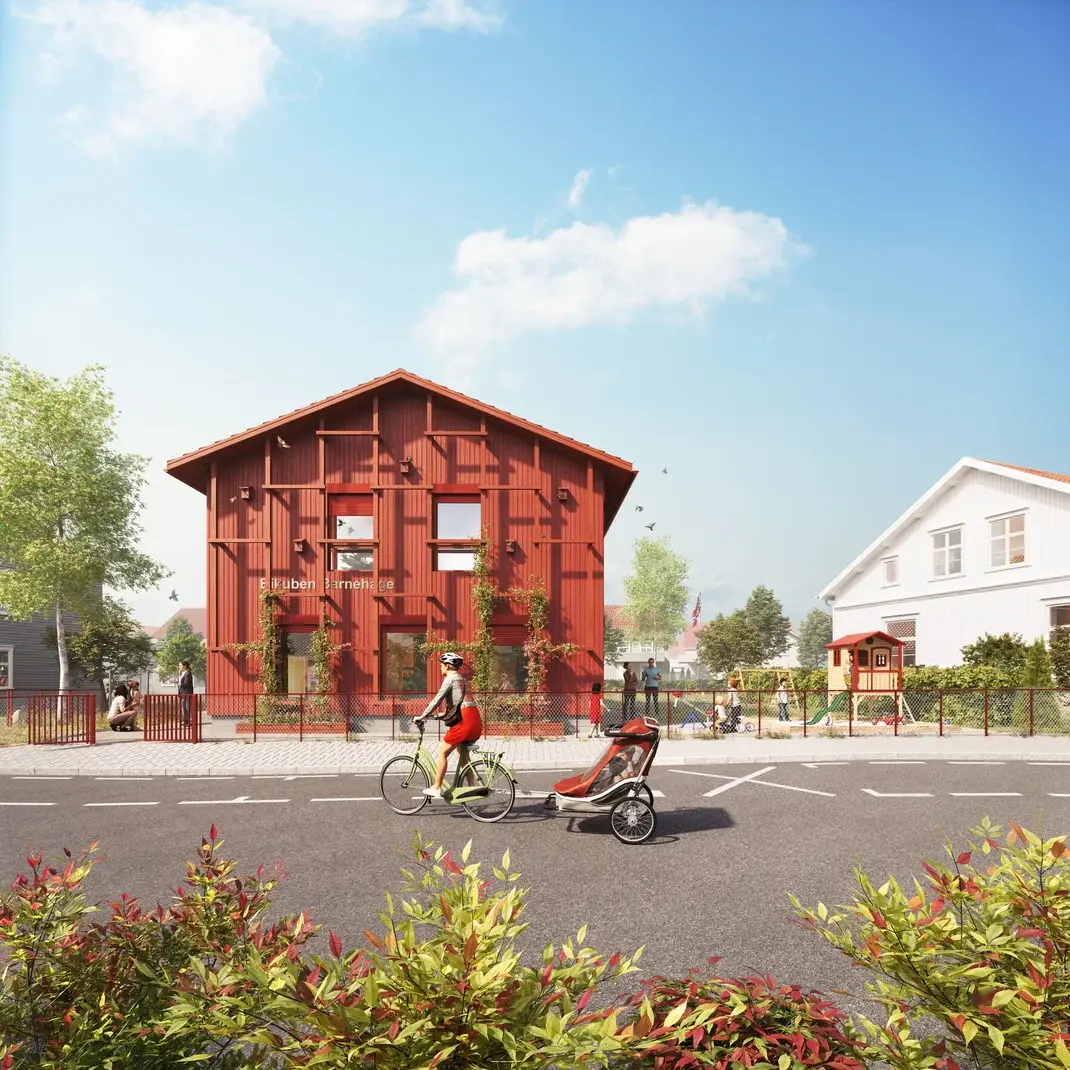
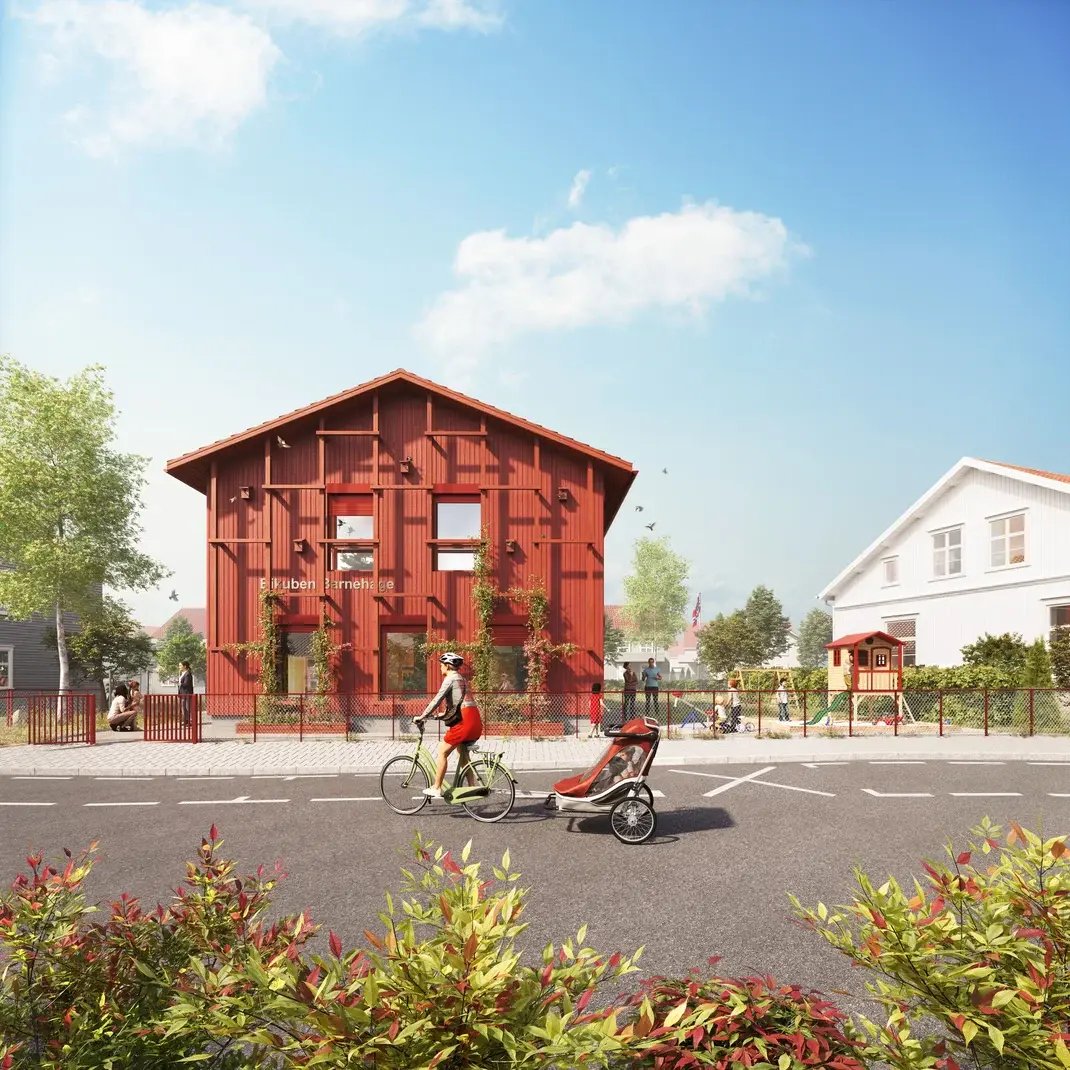 Bikuben Barnehage in Sarpsborg getting a new extension. © Øyvind Johnsen Arkitektur
"I got to feel that sense of mastery, and I always had the chance to work on bigger and more complex tasks. I am completely convinced that is one of the things that has shaped me the most across my entire career as an architect," he says.
After five years he moved to Oslo and worked at, among others, Stein Halvorsen Arkitekter and Mad Arkitekter, where projects such as Trosvikstranda in Fredrikstad and Byhaven in Sarpsborg built a deeper understanding of both technology and aesthetics.
Aesthetics meets technology
The architect is clear that technology and digitalisation are the key to the future of architecture, even though the industry is still lagging behind. He points to LinkedIn feeds full of property-technology systems that are not yet fully developed, and to how long it takes to put new tools to work in practice.
"I've had to learn my way through a lot of programs myself, but there is surprisingly little use for them on many projects. Even so, we need to be ready to adapt when the need arises, and that is exactly why I have also chosen to get involved in several new start-ups that are developing new digital tools for architects and other disciplines in the industry," he says.
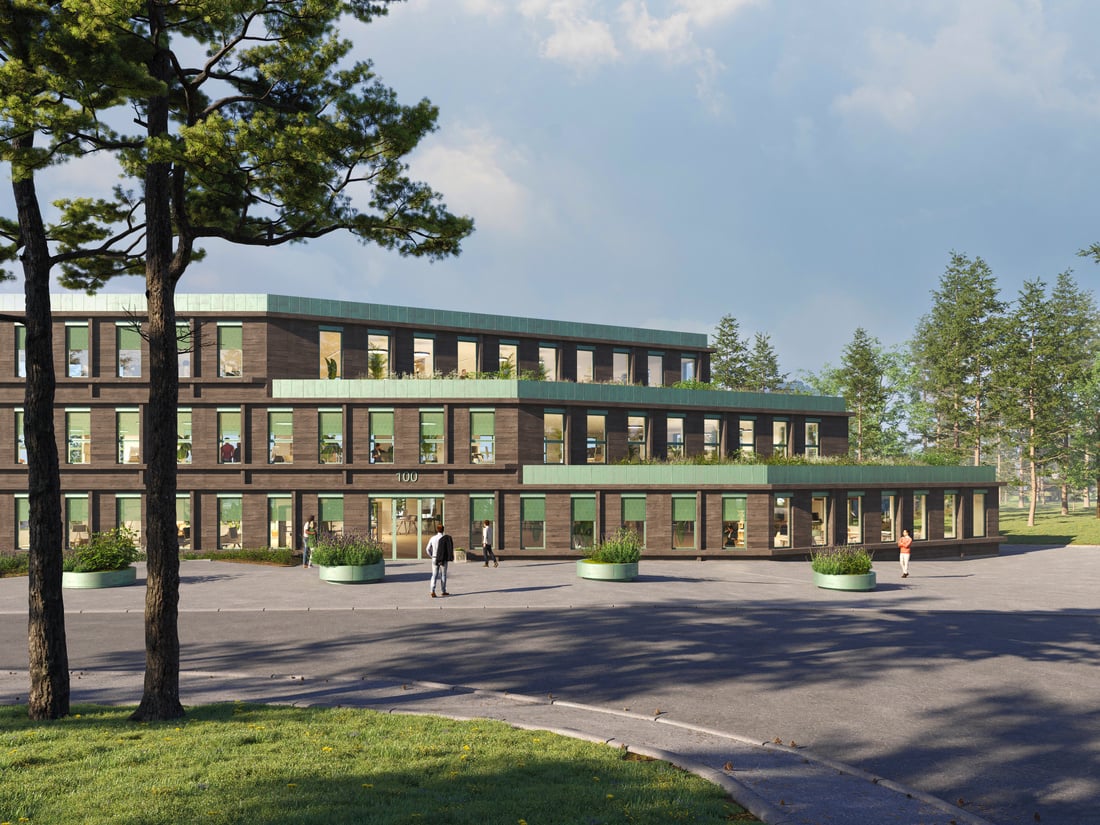 Tuneveien 100. © Øyvind Johnsen Arkitektur
Aesthetics, on the other hand, is a driving force. He believes architecture should not only be functional, but also beautiful and lasting. Polarised debates, such as the architecture uprising's focus on historical styles, challenge modernists to raise their own standard.
"The new things we build also have to be allowed to shine. At the same time, it has to be functional and affordable," he says.
The architect's future role
The architect's commercial thinking comes through clearly in projects such as Byhaven in Sarpsborg and the design of Bikuben kindergarten. The latter is built from warm colours, symmetry, and functional details like climbing plants and birdhouses, a building that all but pulls children in with its playfulness and care. He believes architects should think commercially from an early stage, to create solutions that are both aesthetically beautiful and economically realistic.
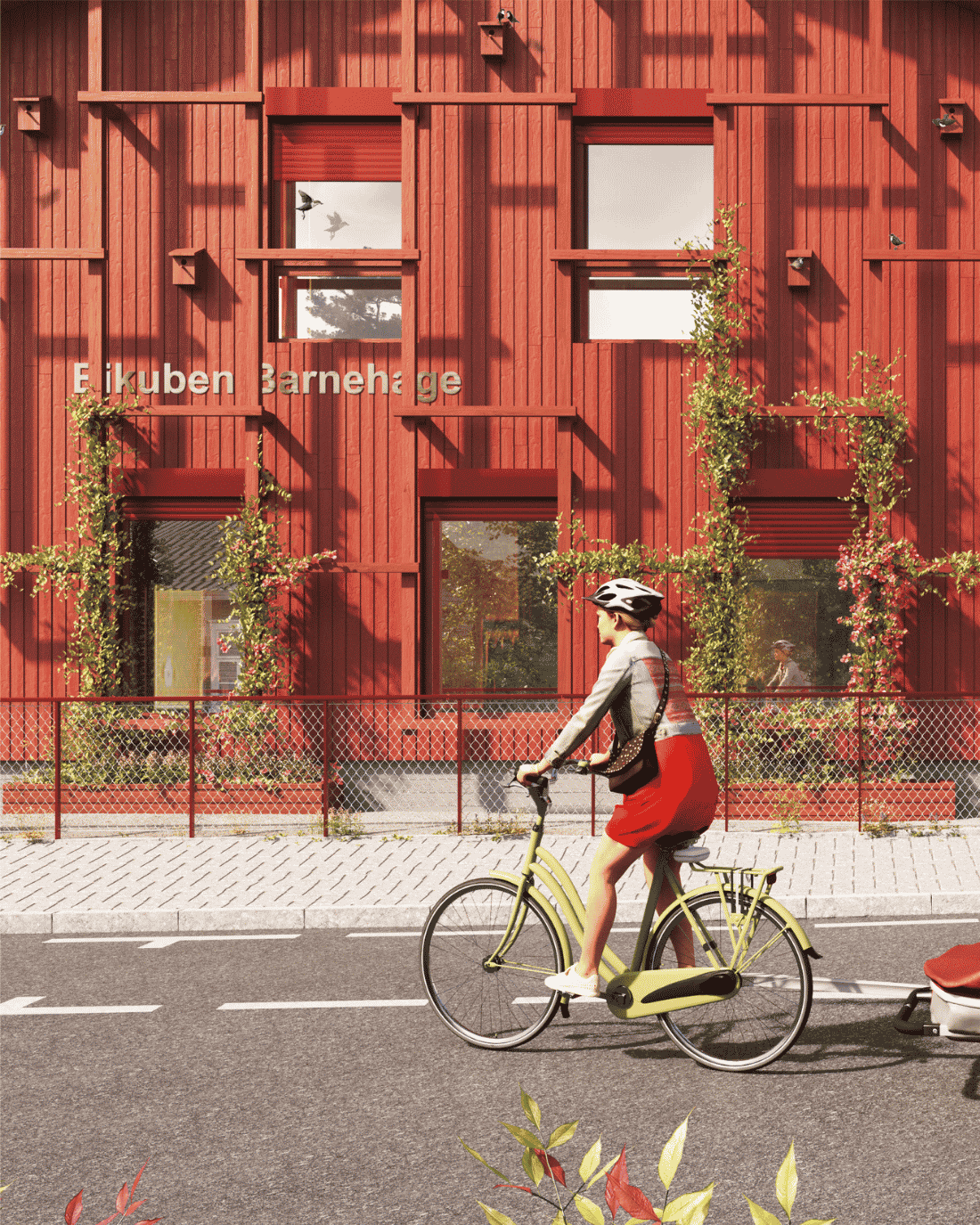 Bikuben Barnehage. © Øyvind Johnsen Arkitektur
Asked how the architect's role will develop, he is optimistic.
"It's about showing that you share the customer's values and interests. That's how you earn trust and the chance to shape a project in a meaningful way," he says.
He points to the importance of collaboration and networking, not only with other architects but across industries. His advice to tomorrow's architects is simple:
"Be curious, grow your network, and sit down with others to learn and develop," he says.
With one foot in the world of aesthetics and the other in commercial and technological ground, he creates architecture that balances the beautiful with the practical, always with an eye on the future.
Do you want to be the next Architect of the Month? Share your story with us.