Marco Schön has a strong feeling for nature and for where we, as people, belong within it. He built his career in a country that was not his own. At Skaara Arkitekter in Oslo he has found his place somewhere between the functional and the artistic, moving from the traditional German to the clean Scandinavian. Perhaps that is where he has always been as a person. That it would grow into his whole life was never quite so obvious to him.
Nature and design
With dual German and Norwegian citizenship, Marco draws on both. "I find the Scandinavian countries much more open to the kind of architecture I prefer, and to be completely honest, that is one of the main reasons I moved here in the first place. Here I get to work far more with clean lines, good rooms, and the interplay between architecture and nature," he says.
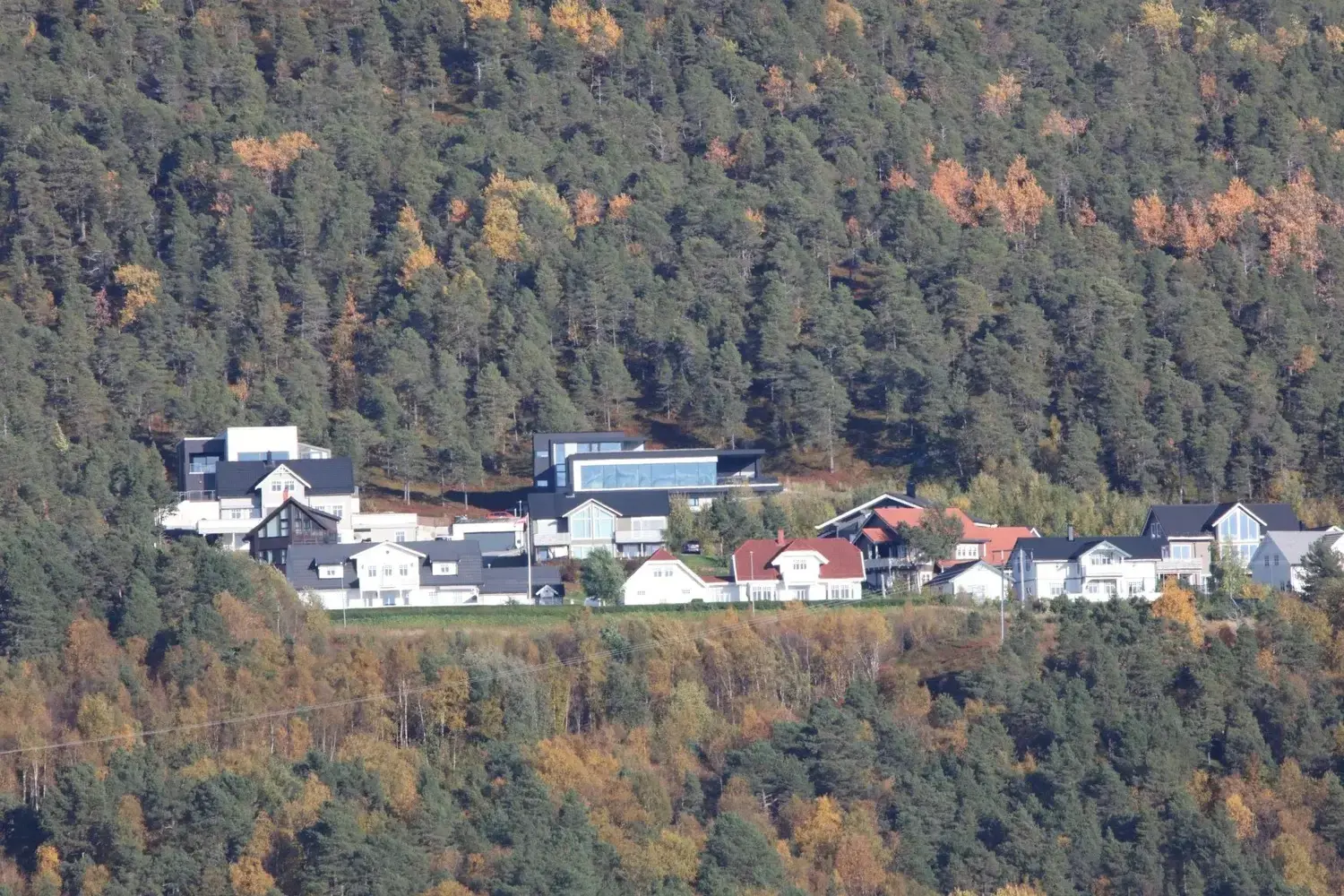
He shows a project in Oslomarka, or 'the house in the forest' as he often calls it. "Drawing a building that would truly become a home in there among the trees is probably one of the commissions I have felt most strongly about. Binding the forest together with a modern design, bringing out the technical possibilities to create a sustainable house, while the whole drawing had to look after the family's need for both space and shelter."
One of the smart moves Marco made was to set an angle into the outline of the house. "That way we created an outdoor space that wraps around a sheltered terrace and screens off the world outside. The roe deer come in and play along with the people, so that you live in step with nature, not at its expense."
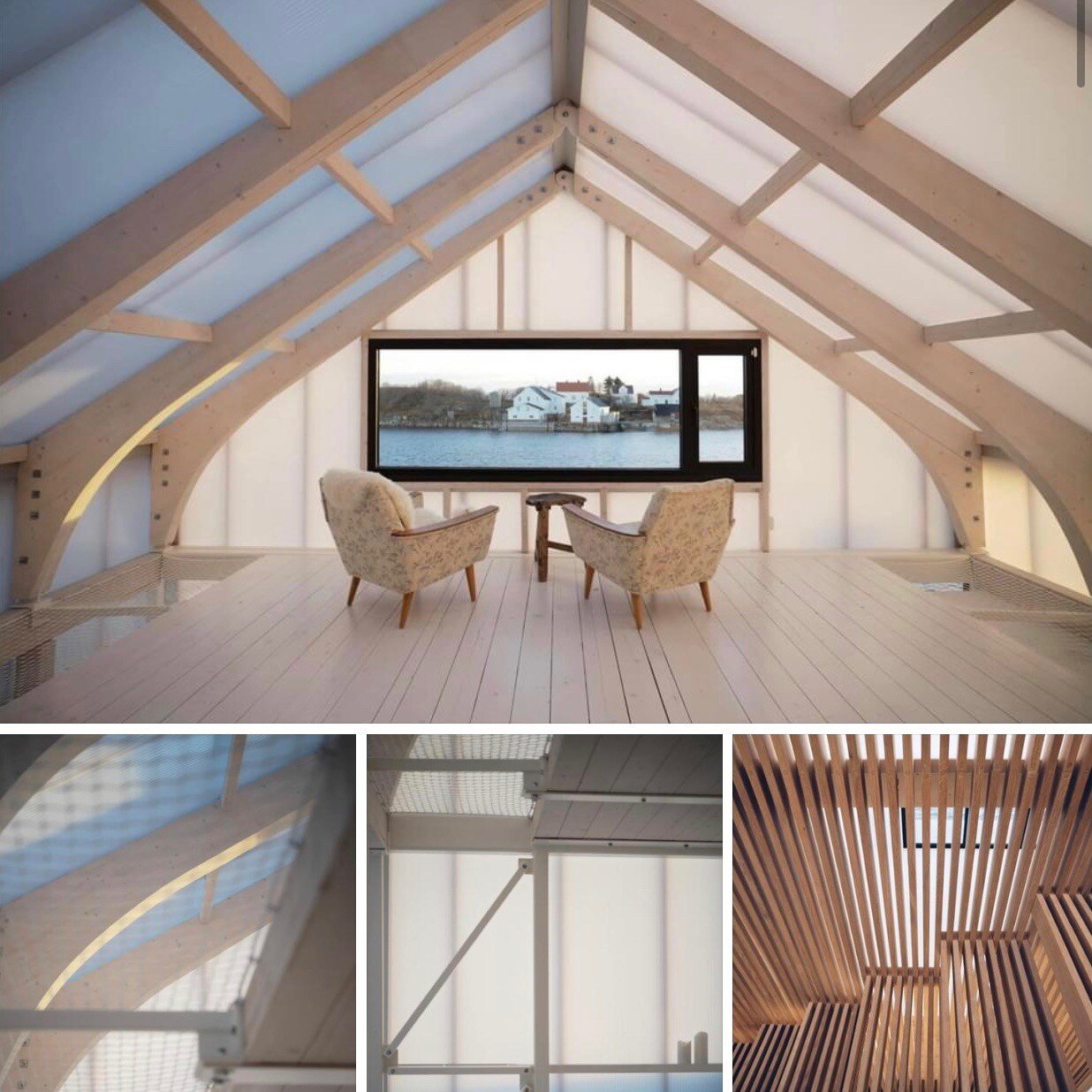 Henningsvær, Lofoten, the old cod-liver-oil works after Marco Schön's transformation.
The road to Norway
Becoming an architect was not obvious when Marco had to choose his studies in Germany. After he summed up his interests, art, physics, chemistry, and biology, for the careers adviser, he was handed an enormous directory and told to start looking. Choosing something artistic felt fairly far off for a young man whose parents held secure administrative posts in state and regional government.
"In the end it came down to engineering, industrial or product design, or architecture. I don't think I fully understood how important that choice would turn out to be for me and for my life, but I am very glad I ended up studying architecture at the Technical University of Braunschweig."
In Germany no one rolled out the red carpet for the newly qualified architect once his studies were over, and Marco found himself in an administrative role in a small municipality outside Hamburg. "I got a chance to design a bridge once, I remember, and I drew one in polycarbonate, a transparent material like plexiglass, which seen from the side almost disappeared into nature and created an illusion. But they weren't quite ready for my ideas."
A more traditional timber bridge was built instead, and the young architect took it as a sign that it was time to look for other challenges. He turned toward Scandinavia and finally settled on Oslo over Stockholm and Copenhagen. Before he knew it he was working through Norwegian courses and job applications. "Here in Norway I get to work as an architect in a way I really like. I am not just a project manager, which is easy to become in Germany. No, here I really get to open up and create something fine."
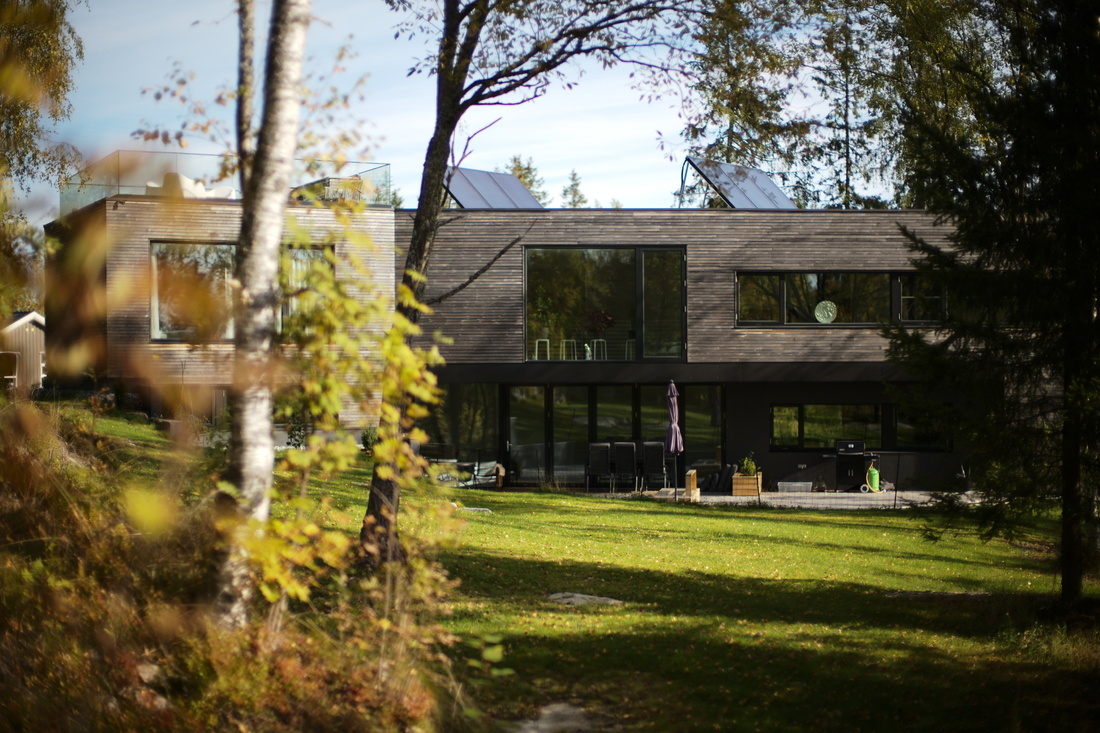 The house in the forest, Oslomarka
Looking ahead
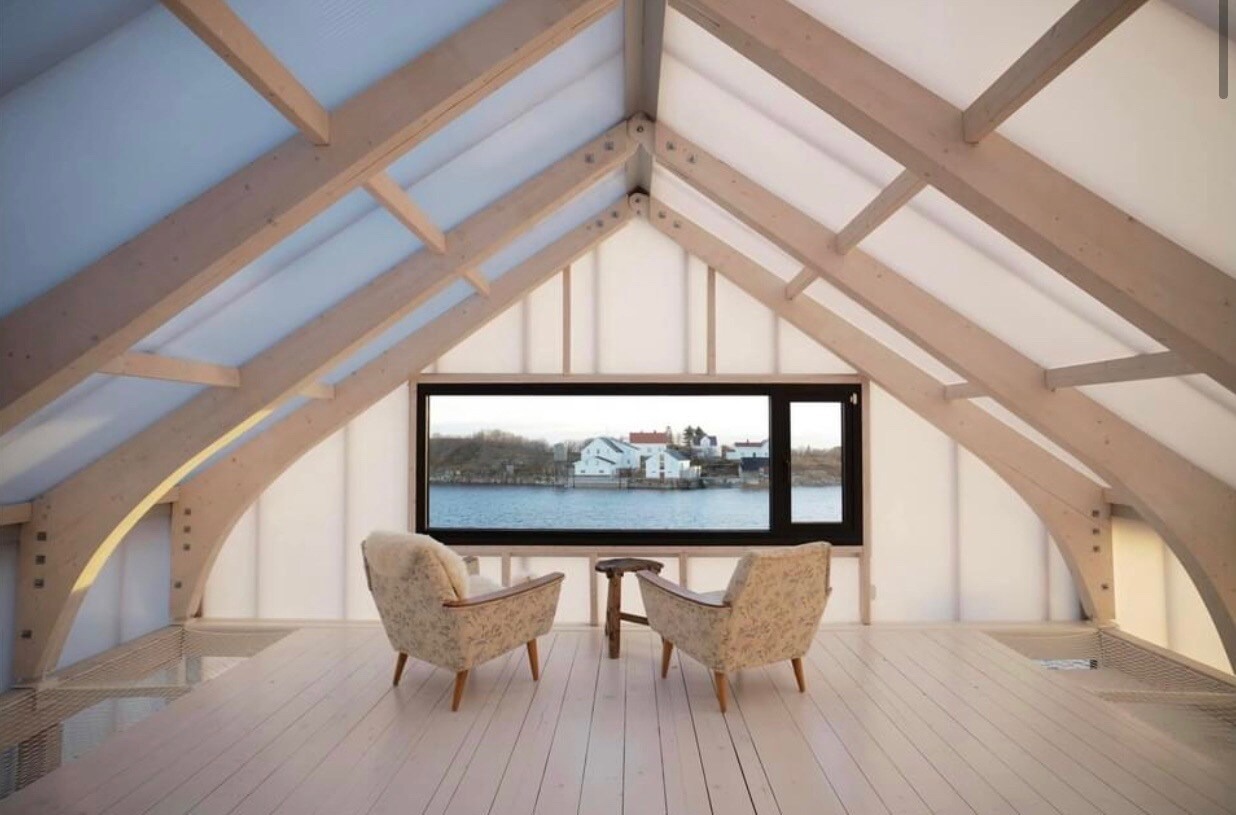
Marco talks about the rehabilitation and transformation of an old cod-liver-oil works in Henningsvær, Lofoten. The old building was raised in the traditional way in 1939, and part of it had to be rebuilt after a storm in 2011. "Here I really got to play with both materials and different effects that set an exceptional frame for the mood of the building. One of the windows gives the illusion of being a TV or a screen, but what you're looking at is the view. We also used highly insulating, transparent aerogel panels on the facade, and together this draws nature and light into the building in a completely unique way."
That is exactly how he most likes to work, and how he sees himself working in the future. Using new methods and tools, perhaps even AI, he wants to explore the frameworks we move within today. But even if a thing is possible, that does not mean we should do it. It is the design process itself that drives Marco on, and that is where he wants the focus to stay, now that we have to think again in so many ways.
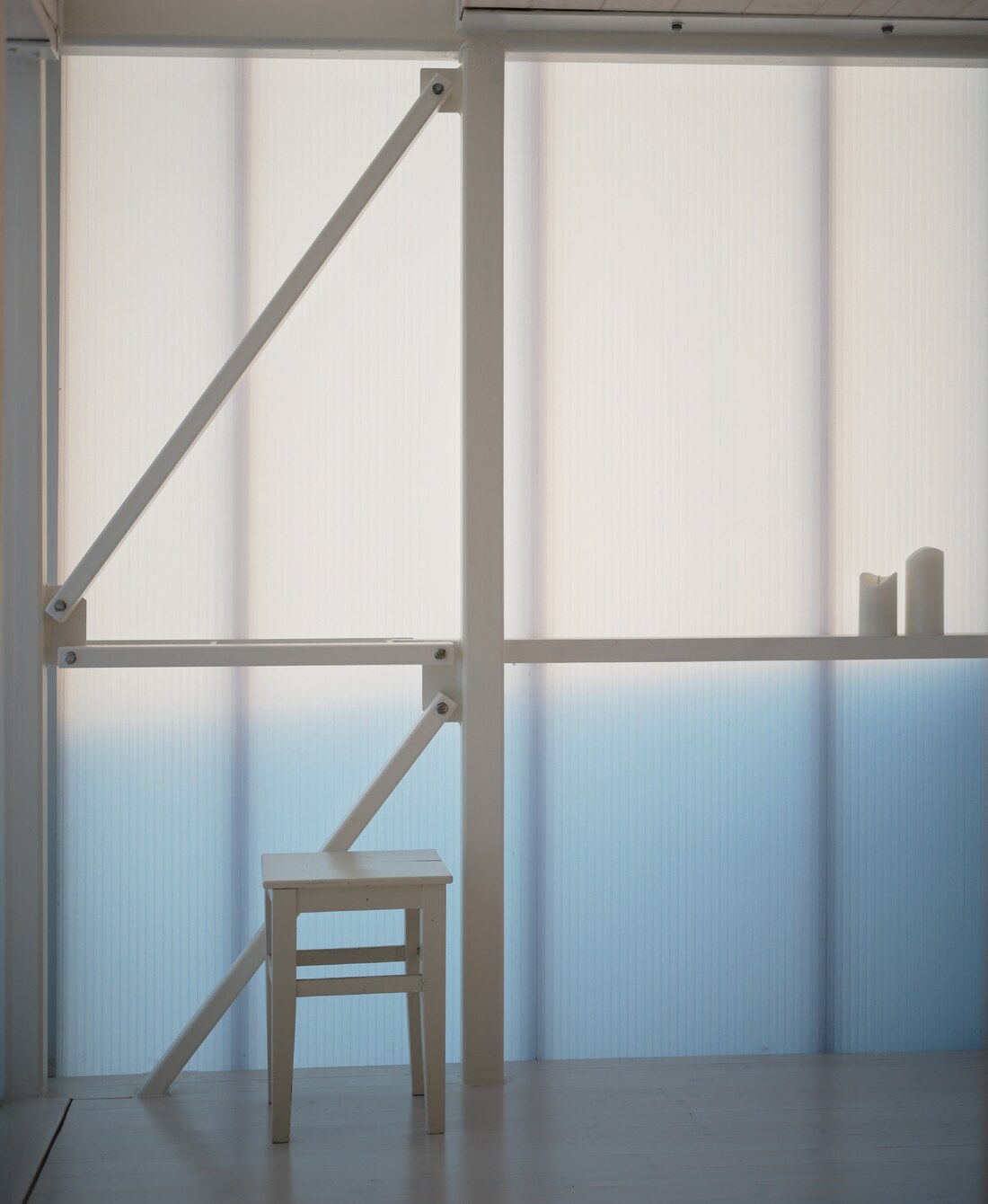 Henningsvær, the facade with its semi-transparent aerogel panels.
"As architects we should keep telling the story of the building, to the people who live there and to what we find around it, because that is our task. Not just building to build, or stretching limits to see how far they can go. We should build for people and for the future, and we should do it in a sustainable way that is good for everyone."
Do you want to be the next Architect of the Month? Share your story with us.