How can an interest in art, craft, and furniture help improve the conditions children and young people grow up in, in Gothenburg? The obvious answer is that it probably can't. But it can! Lars Olausson's path to his job at architecture firm D Office Arkitekter has taken more than one detour, but today he designs schools and public buildings with one goal in mind: that everyone he designs for feels pride and safety in his universe.
%201.png)
Designing for life
"I'm probably not a typical architect. I think I have a bit of a different perspective, in a way. As a craftsman, I'm probably a bit more concerned with following the whole project and being even closer to it. I work with the building as a whole, not just a facade, though that might also have a lot to do with the fact that I generally design buildings for a great many people," Lars says.
Lars began his journey into architecture at 30, considerably older than his fellow students. "I felt I was in a bit of a different place in life than my classmates, but I haven't regretted for a second that I changed profession. Now I get to create buildings that the surrounding community can live in, and that's fantastic," Lars says happily.
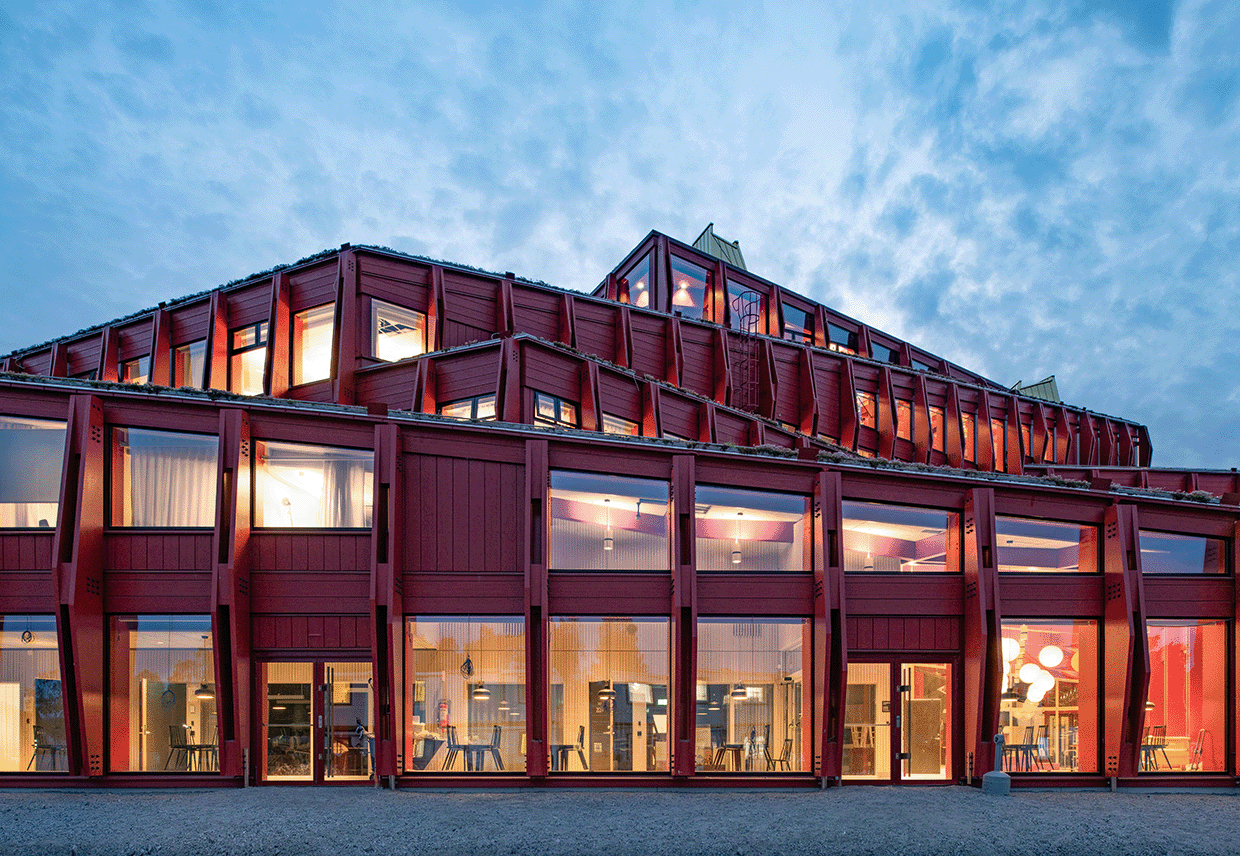 Kunskapshuset. © Lars Olausson, Liljewall; photo: Anders Bobert
That is exactly what Lars does in his job at D Office Arkitekter in Sweden. Designing for life. "It's great fun to think about all the people who will use the buildings I design and develop. That some of them will have their first day of school there, do their first maths problem there, and fall in love for the first time in the rooms and corridors I've shaped. Sometimes I stop by once a building is in use, just to see how the children and teachers use it. To hear what it sounds like when it's full of people. It's a very special experience."
Social sustainability
Everyday work, though, is shaped far more by tight municipal budgets, fixed frameworks, strict requirements, and a focus on wear, since public buildings clearly carry more governing constraints than anything found on the private market. At the same time, social sustainability considerations also shape the design Lars works on. "You have to remember that everyone should feel good at school, for example, and in my role as architect I can do a lot through the right choice of materials and the design of corridors and rooms. Wood creates a kind of homeliness that signals warmth and care, and wide enough corridors, open but not cold rooms, that's what makes most people feel at home. Then in some cases we also have to weigh other considerations."
Lars describes a project where one of the goals was to create a building where everyone could see everyone else, where no one ended up out of sight. "It was important that we managed to find a balance between being very open, and at the same time protective. We can only do that with good, well-considered solutions, where a high degree of user involvement helps us see how we can shape good meeting places that young people feel both proud and happy to use. We also spend a lot of time on the right choice of materials, so we can protect things like wood surfaces without it showing, and use much stronger and more durable materials to a greater extent, while still making sure they look good and give the right feeling."
Right now Lars is working on exactly this kind of building: Backavallen sports hall in Gothenburg. The finished drawings are due in spring 2025, and the building will be a full-size hall with grandstands seating up to 150 people. It will also include a 150 square metre activity hall that can be used for things like combat sports and dance. "This is a good example of a significant investment in an area where it matters that young people can be brought together for positive activities."
%201.png?width=1240&height=814&name=Backavallen%20illustration%20D%20Office%20(2)%201.png) Backavallen sports hall, Gothenburg. © D Office Arkitekter
Backavallen sports hall, Gothenburg. © D Office Arkitekter
The strong focus on social sustainability doesn't mean Lars loses sight of the good climate measures he can lay the groundwork for at an early stage. One of the things he sees as most important is building houses that stand the test of time, choosing good materials that hold up and don't demand heavy maintenance or deteriorate quickly.
Lars is also clear that he thinks it's important to take a holistic view of what he designs. "I often look at the history of the area, how the building can fit in, what its purpose is. It has to have its own confidence, in a way. Every house should make a difference and live in its larger context. Otherwise it's just a house."
Building with care
That's exactly why he also sees a big climate benefit in taking care of old buildings. "I often see an eagerness to demolish and build something new instead, but what about rebuilding instead? It's not always true that the new option is the best, or that the old one has nothing left to offer. And if we're going to cut the construction industry's large climate footprint, we need to make changes that actually count."
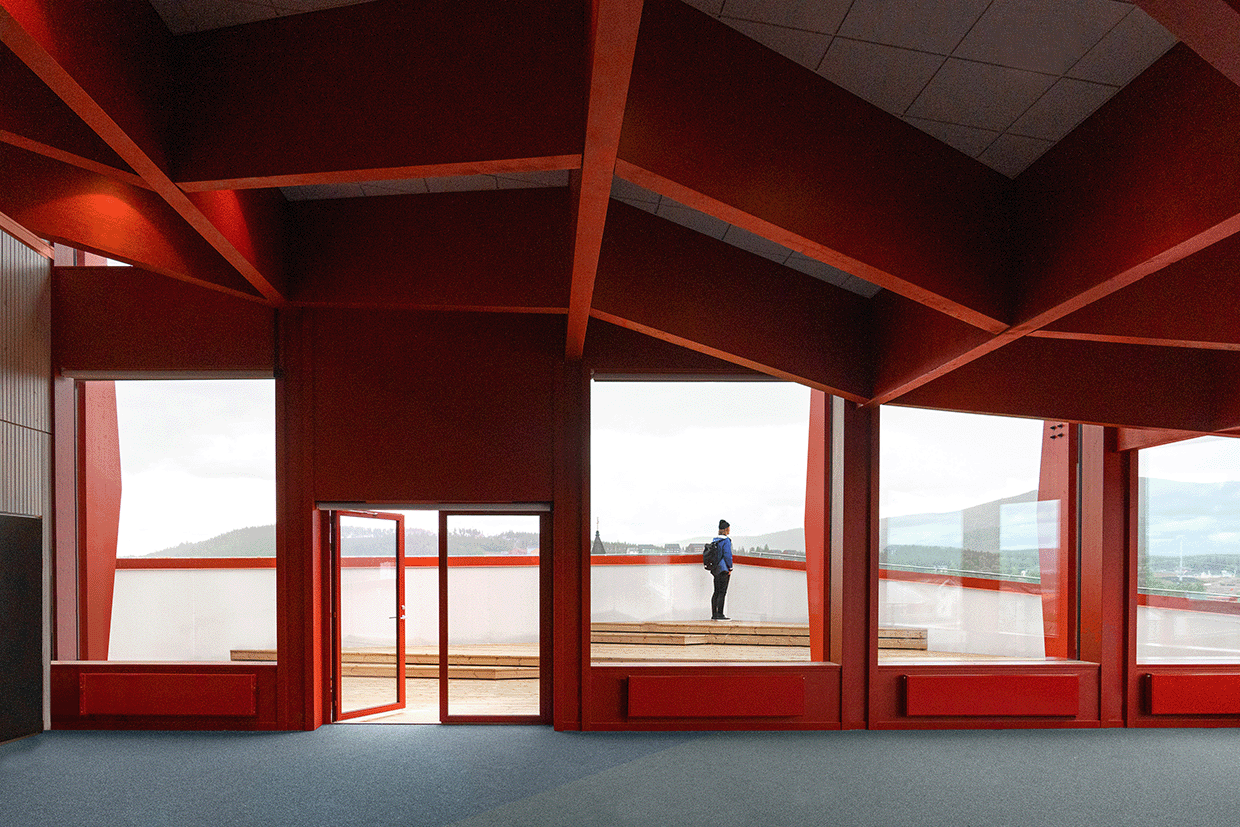 Kunskapshuset © Lars Olausson, Liljewall; photo: Anna Kristinsdóttir
Asked where we're heading with today's new schools and community buildings, Lars gives an answer that suggests we're all shaped by what the world looks like right now. "Lately things have been shaped by large, dividable classrooms, where children should be able to move from zone to zone and learn in many different rooms at the same time. Now I feel we're moving more and more toward half-size classrooms, less movement, and instead safe areas where we can gather in a cosy setting. We're also working more and more on things like acoustic environments in schools, thinking about how things should sound and feel. The atmosphere created in a room matters more and more."
And maybe that's exactly the direction architecture will take for our children going forward. Toward a safer everyday life, where we can both see and look after those who need it. In buildings where they are heard, and where you might suddenly meet the architect standing there enjoying the sound of play and laughter, in the house he long pictured only in his own head and at his own drawing board.
Do you want to be the next Architect of the Month? Share your story with us.