Ewelina Pajak is an architect, an engineer, and a WELL Accredited Professional at LINK Arkitektur AB. Most of all, she is a clear voice for architecture with empathy. She designs buildings for people, not just for function. With roots in the mountain town of Zakopane and a solid professional background from both Poland and Sweden, she pairs technical understanding with a deep sense of how architecture shapes our health, our quality of life, and our identity.
From the mountains of Poland to the Nordics
"For a long time I thought I would go in a more technical direction, maybe IT, but architecture hit me right in the heart. It was love at first sight," Ewelina says with a smile.
Growing up in Zakopane, a lively tourist town of skiing, mountains, and short summers, still shapes Ewelina's perspective. The nature, the people, and the busy townscape gave her an early sense of how surroundings form a life. Today she finds many of the same qualities in Sweden, but she brings with her a strong wish to build smarter and warmer communities, not only buildings.
"We know a great deal about what it takes for people to thrive, yet we often build shopping centres and offices as if it made no difference. It is time to do something about that," she says.
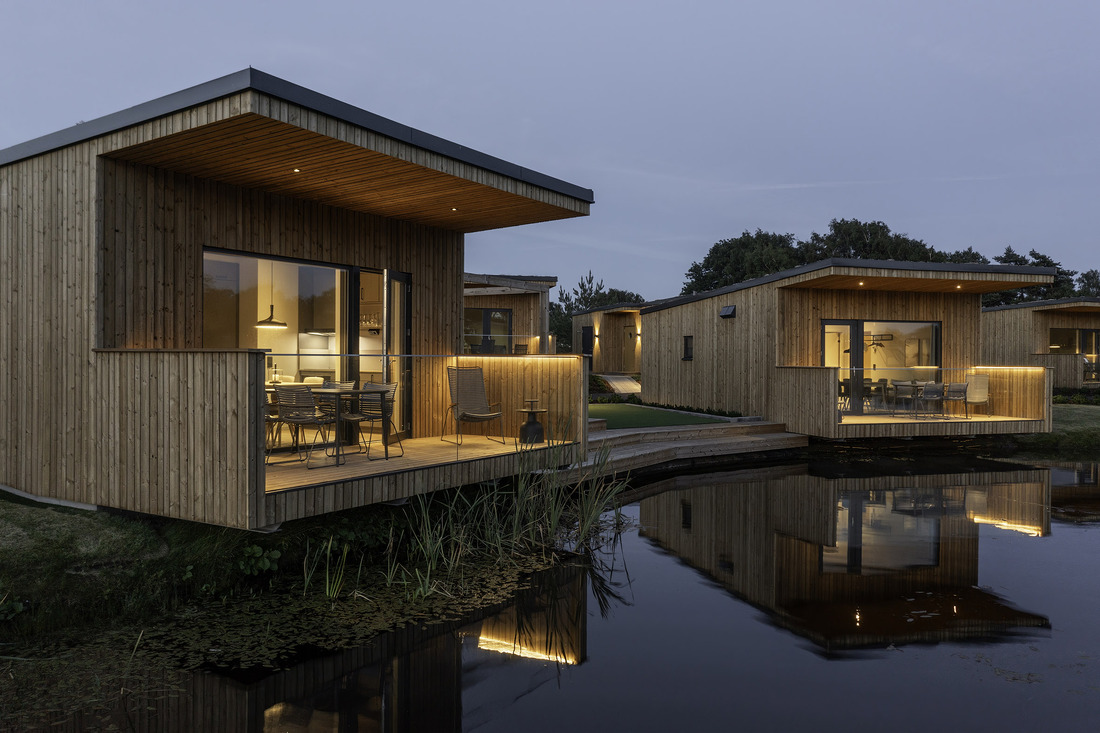
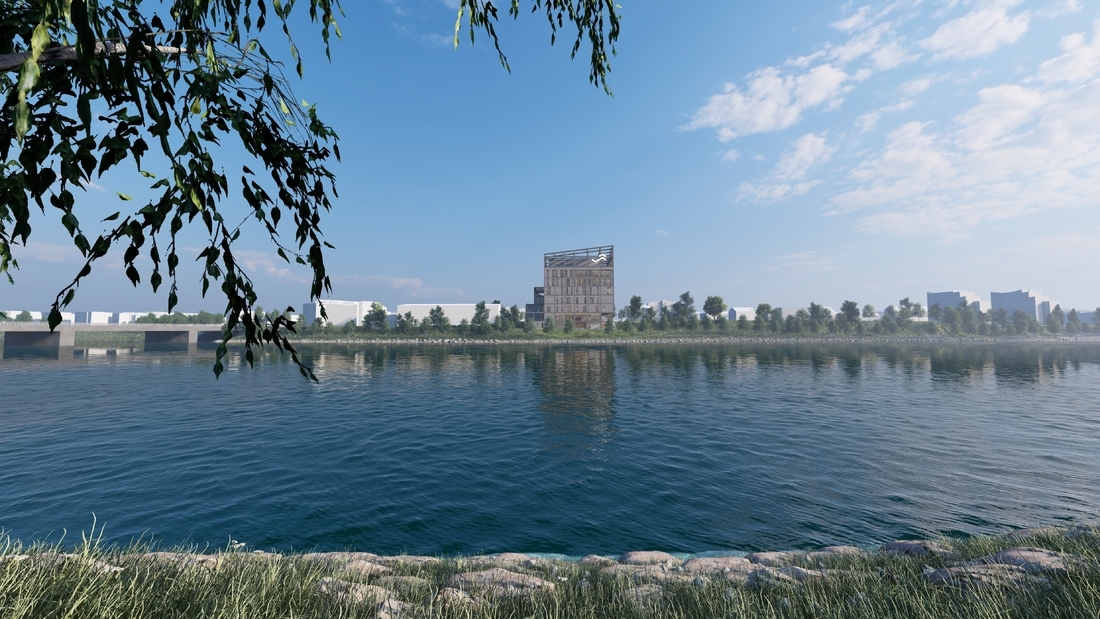 Arctic Center of Energy, Skellefteå, riverbank. © Ewelina Pajak, ACE Allmäntyta
As a certified WELL Accredited Professional, Ewelina is interested in how architecture can support both physical and mental health. The WELL Building Standard is based on research and measures a building's ability to support people's wellbeing through elements such as light, air, movement, acoustics, materials, and spatial experience. The focus is not only on efficiency and cost. It is on the people who use the building.
"We need to create environments that help us breathe, think, and be. Spaces we actually want to spend time in. A building is not just something we have to be in, it is something we want to use," she says. And this is exactly what comes through clearly in her work today.
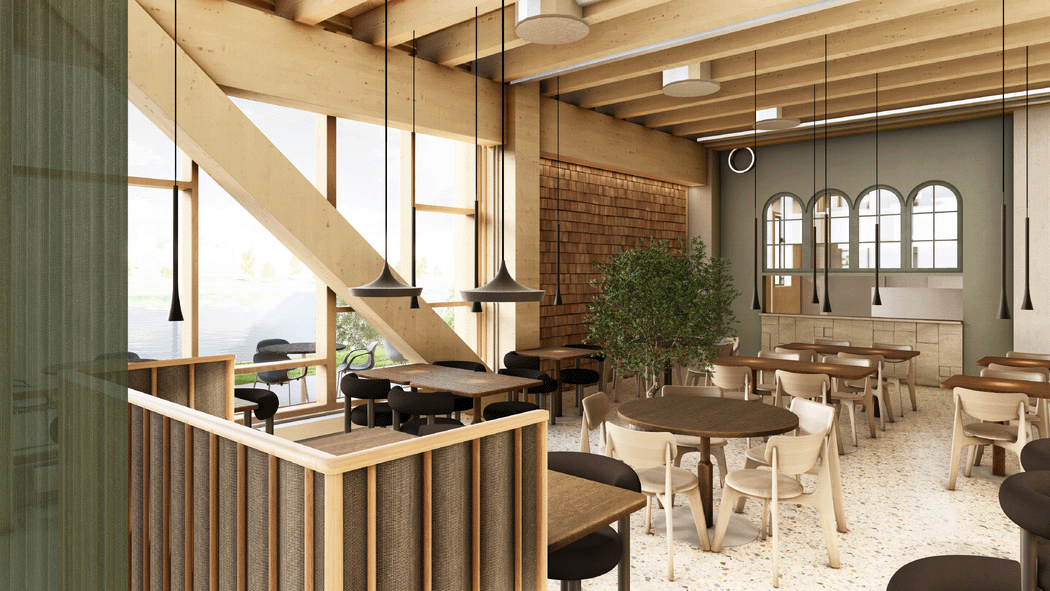
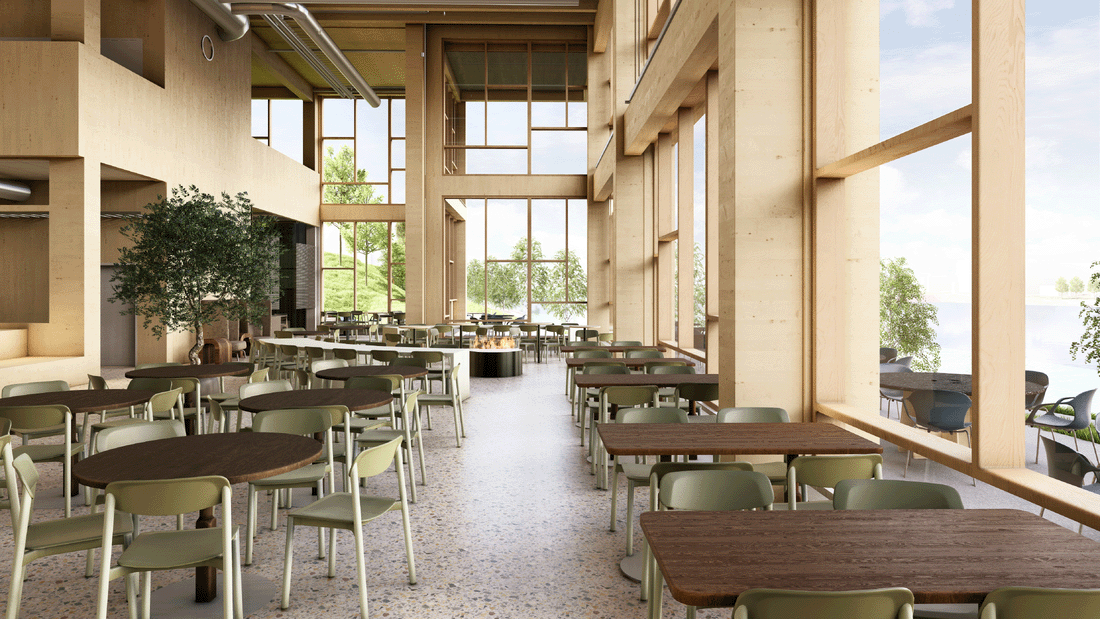 Arctic Center of Energy, Skellefteå, common area. © Ewelina Pajak, ACE Allmäntyta
The school as a carrier of identity
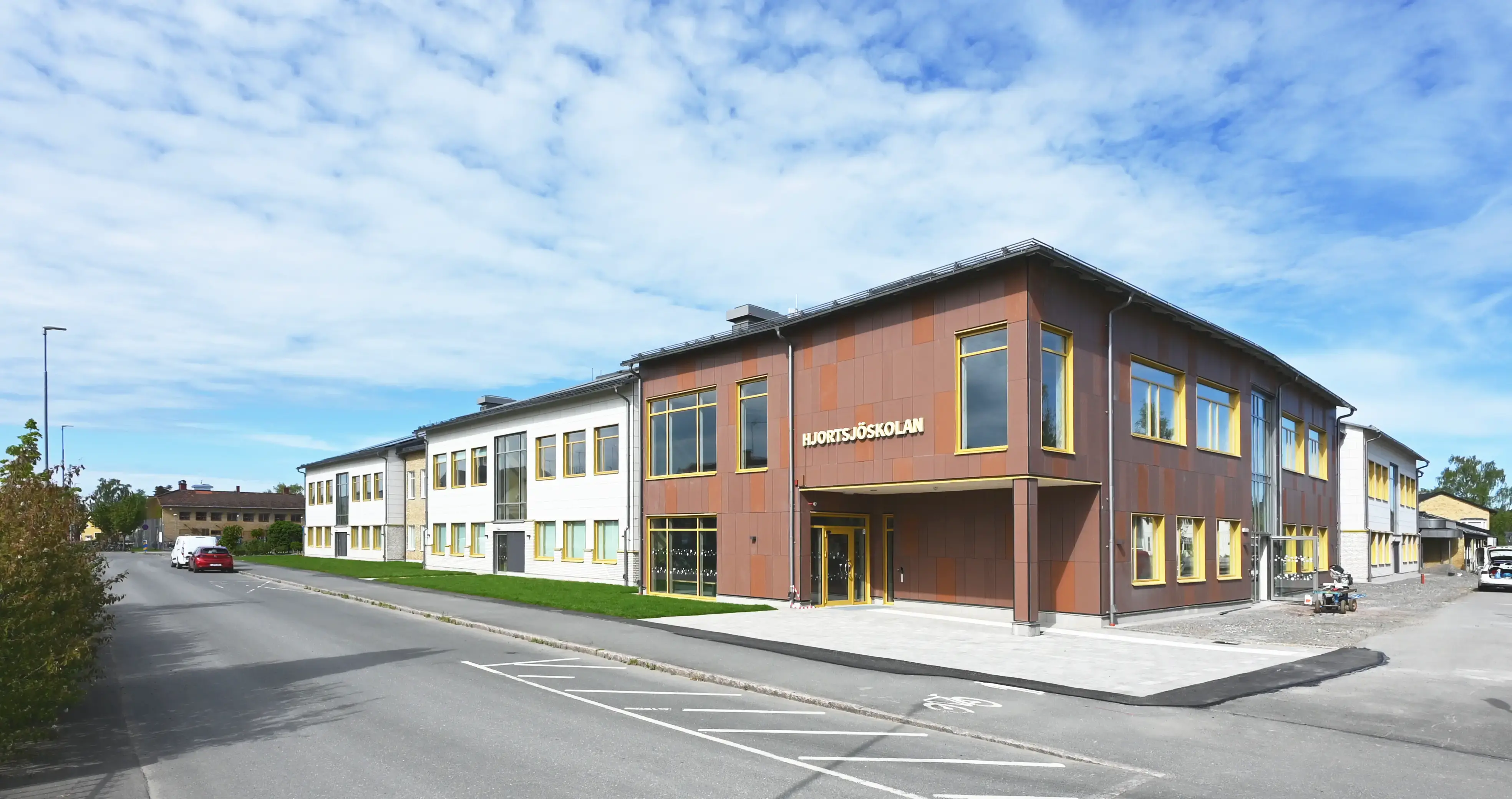
Ewelina has worked across a broad range of buildings. Over her career she has been involved in everything from retail and offices to large public projects. Today she is especially engaged in schools and other public buildings. For her, there is a deep difference between designing offices and designing a school.
"A school is a place for identity, play, learning, and sensory experience. We are building for children, and that does something to you. It is not just about covering functions, but about creating safe, inspiring spaces for the people of the future."
She misses the same all-round thinking in office buildings: "Why do we not do the same for adults? Why should children have the best rooms, while adults are packed into standardised, grey office landscapes? I think we have to redefine what an office is, and to do that we have to start from where people thrive," Ewelina says of her vision.
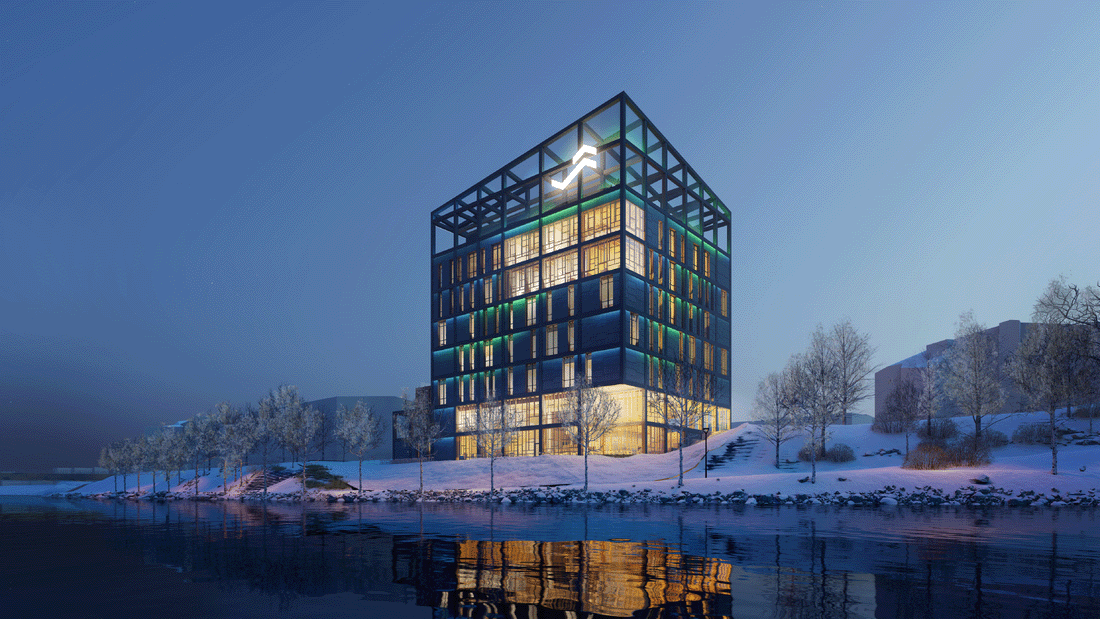 Arctic Center of Energy, Skellefteå, on a winter night. © Ewelina Pajak, ACE Allmäntyta
Instead of centralised office buildings in city centres, Ewelina pictures local work hubs: offices close to home, yet still professional and social. A place you want to be, not just have to be.
She also points to housing projects where community across generations can be a key to better health and quality of life. Shared kitchens and outdoor kitchens, meeting places, simply architecture that helps break isolation and create new forms of everyday community.
"What we know about feeling at home should be carried into the design of public buildings too. We do not need to rationalise our way out of everything that matters."
Arctic Center of Energy, a vision in practice
One of Ewelina's most important projects is the Arctic Center of Energy in Skellefteå, described as Sweden's smartest property. Here she helped create a sustainable, people-centred office building, where old materials from demolition projects were reused and where local craft traditions were brought into modern architecture.
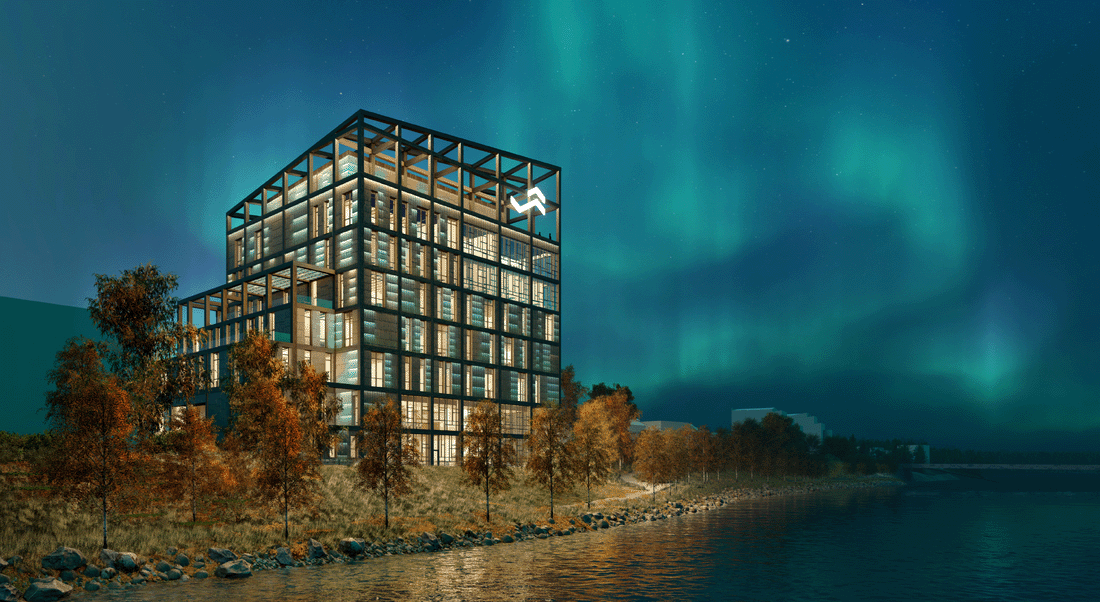 Arctic Center of Energy, Skellefteå. © Ewelina Pajak, ACE Allmäntyta
"We fought to use good materials, to create warm spaces, and to show that it is possible to take sustainability and wellbeing seriously, even in large projects on tight budgets. It all comes down to will and knowledge," she says.
The project is not only technically innovative. It is also a symbol of how architecture can contribute to identity and place development in the northern regions.
Ewelina is passionate about putting empathy at the heart of architecture. She wants to challenge clients, politicians, and colleagues to think beyond budgets and square metres.
"We have to ask the big questions. Why do we do what we do? When will we slow down and start building places that people genuinely enjoy? Architecture can, and should, help solve the challenges society faces, from mental health to the climate crisis."
As a WELL AP, an architect, and a fellow human being, she sees enormous potential for change. And she does not intend to give up any time soon.
"I believe we can use architecture to build better societies. We are in a demanding time right now, but we hold the knowledge. Now we just need the courage to use it."
Do you want to be the next Architect of the Month? Share your story with us.